Sacred City of Anuradhapura
Best Time to Visit
The dry seasons from January to April and June to September offer the most comfortable conditions for exploring the expansive ruins. The Poson Poya (June full moon) festival is a particularly special time to visit, as thousands of pilgrims gather at Mihintale nearby.
Overview
Anuradhapura reigned as Sri Lanka’s capital for over 1,400 years, from the 4th century BCE to the 11th century CE, making it one of the longest-serving political capitals in history. Nestled in the dry plains of the North Central Province, this UNESCO World Heritage Site is a sprawling testament to the sophistication of ancient Sinhalese civilization. The city’s sacred precinct stretches across thousands of hectares, dotted with colossal dagobas, crumbling monasteries, intricately carved stone guardhouses, and one of the most venerated trees on Earth.
For Buddhists, Anuradhapura holds immense spiritual significance. It was here that Buddhism took root in Sri Lanka, brought by Arahat Mahinda in the 3rd century BCE, and the city quickly grew into one of the great centres of Theravada Buddhist learning and worship. Today, white-clad pilgrims still stream through the ancient gates to pay homage at sites that have been continuously venerated for well over two millennia.
What to See
Sri Maha Bodhi
The Sri Maha Bodhi is the oldest historically authenticated tree in the world. Grown from a sapling of the original Bodhi Tree under which the Buddha attained enlightenment, it was brought to Sri Lanka by Princess Sangamitta in 288 BCE. The tree stands within a walled compound, draped in prayer flags and surrounded by devotees at all hours. Its gnarled branches are propped up by golden supports, and the atmosphere around it is one of deep reverence.
Ruwanwelisaya Dagoba
Built by King Dutugemunu in the 2nd century BCE, Ruwanwelisaya is one of the most iconic stupas in Sri Lanka. Its gleaming white dome rises 55 metres and is encircled by a wall adorned with hundreds of sculpted elephants. At dusk, when devotees light oil lamps around its base, the dagoba takes on an ethereal glow.
Jetavanaramaya
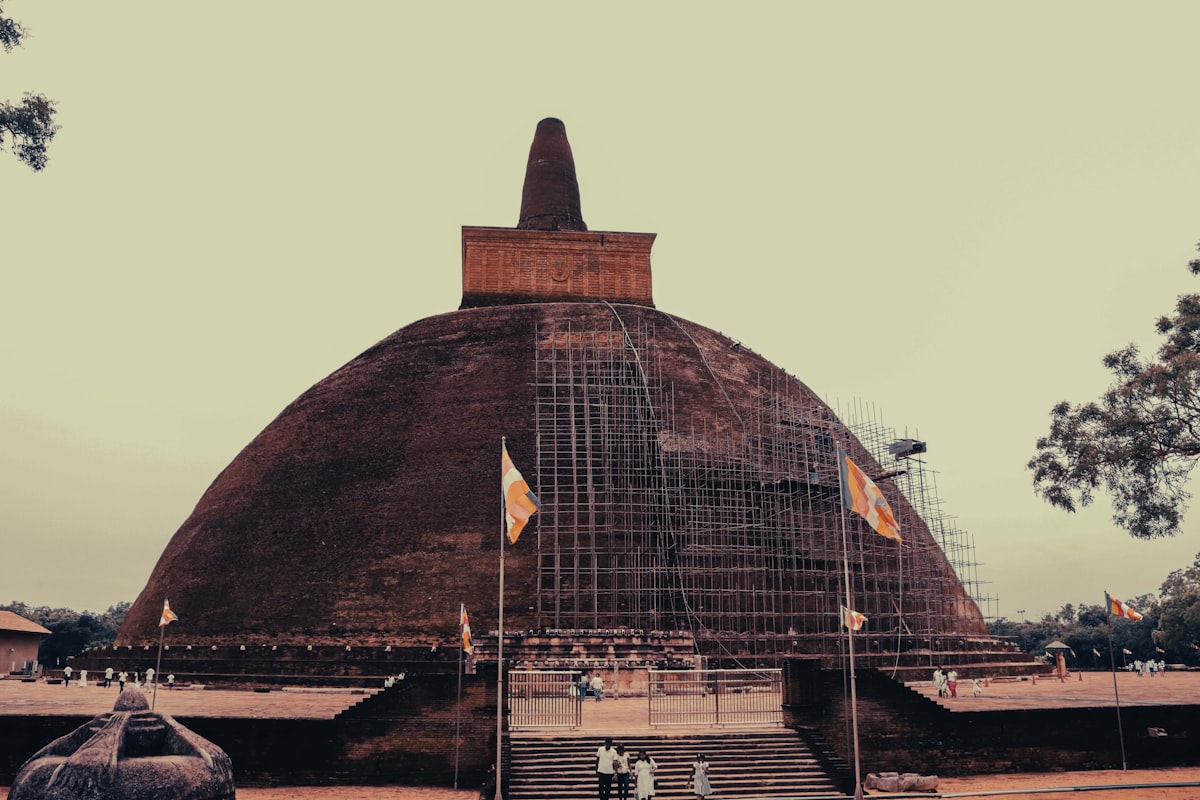
At its original height of approximately 122 metres, Jetavanaramaya was one of the tallest structures in the ancient world and remains the largest brick structure ever built. Constructed in the 3rd century CE, it required an estimated 93 million bricks. Even in its partially restored state, the sheer scale of the stupa is awe-inspiring.
Thuparamaya
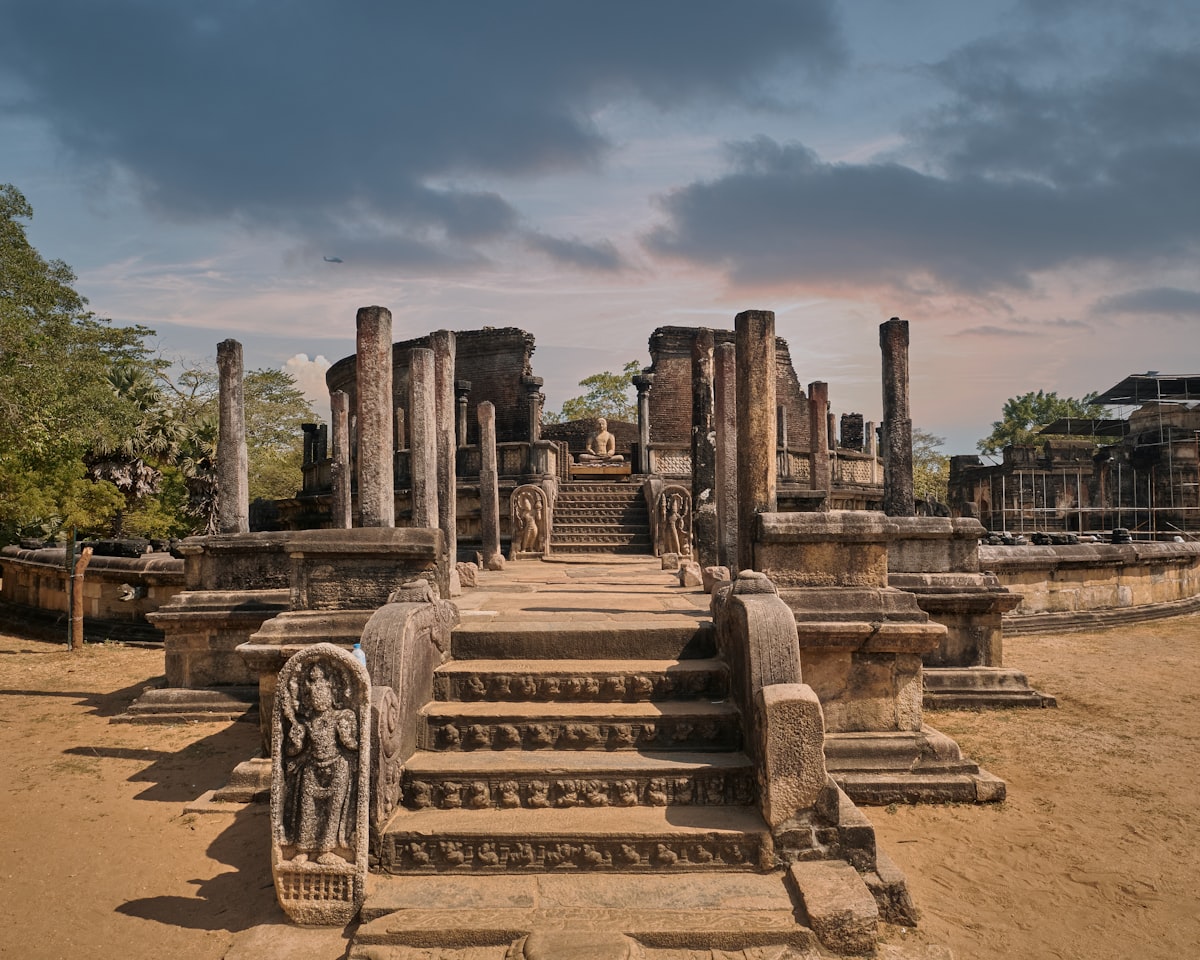
The first dagoba ever built in Sri Lanka, Thuparamaya was erected in the 3rd century BCE by King Devanampiyatissa to enshrine the right collarbone of the Buddha. Surrounded by graceful stone pillars that once supported a vatadage (circular relic house), it remains an active place of worship.
Abhayagiri Monastery
Once home to 5,000 monks, Abhayagiri was a major centre of Mahayana Buddhist scholarship. The complex includes a massive stupa, beautiful moonstones, guard stones, and the remains of refectories and bathing ponds. The on-site museum houses fascinating artefacts unearthed during excavations.
Isurumuniya Rock Temple
Tucked against a rocky outcrop beside a tranquil pond, Isurumuniya is renowned for its exquisite stone carvings, including the celebrated “Isurumuniya Lovers” panel, which depicts a couple in an intimate embrace. The small museum inside the temple is well worth a visit.
Tips for Visitors
- Rent a bicycle: The sacred city is vast, covering over 40 square kilometres. Cycling is by far the best way to explore the ruins at your own pace. Bicycles are available for hire near the main entrance and most guesthouses.
- Dress respectfully: As an active pilgrimage site, modest clothing that covers shoulders and knees is required at all religious monuments.
- Start early: Begin your tour at 7:00 AM to take advantage of the cooler morning hours. The midday sun in the dry zone can be punishing.
- Bring water and sunscreen: Shade is limited across the archaeological zone, and facilities are sparse between sites.
- Allow a full day: Most visitors need at least a full day to see the major sites properly. Two days is ideal if you wish to include Mihintale, the nearby hilltop monastery where Buddhism was first introduced to the island.
- Poya days: Full moon days (Poya) are public holidays and sacred observance days. The sites will be busier with pilgrims but offer a more authentic spiritual atmosphere.
Photo Gallery
How to Get There
By Bus
LKR 500 - LKR 1,200Air-conditioned intercity and normal services available; frequent departures from early morning
By Train
LKR 300 - LKR 1,800First-class observation saloon and second-class reserved seats recommended; book in advance
Private Vehicle
LKR 15,000 - LKR 22,000A bicycle is the best way to explore the sprawling sacred city once you arrive
Entrance Fees
| Visitor Type | Adult | Child |
|---|---|---|
| Sri Lankan Visitors | LKR 50 | LKR 25 |
| Foreign Visitors | $25 | $13 |
Current Weather
Loading weather data...