Adam's Peak (Sri Pada)
Best Time to Visit
The pilgrimage season runs from Poya day in December to Vesak in May. The pathway is illuminated and tea shops operate during this period. Outside the season, the climb is still possible but without facilities.
Overview
Adam’s Peak (2,243 metres), known as Sri Pada in Sinhalese, is one of Sri Lanka’s most sacred and iconic landmarks. At its summit sits a rock formation known as the “sacred footprint,” venerated by Buddhists as the footprint of Lord Buddha, by Hindus as the footprint of Lord Shiva, by Muslims as the footprint of Adam, and by Christians as the footprint of St Thomas.
The pre-dawn pilgrimage to catch sunrise from the summit is one of Sri Lanka’s most extraordinary experiences.
The Climb
The Route
The main climbing route starts from Dalhousie (Nallathanni) village and ascends approximately 5,200 steps over 7 km. The path is well-maintained during pilgrimage season with illuminated steps, rest stops, and tea shops along the way.
Duration
- Average climber: 3-4 hours up, 2-3 hours down
- Fit hikers: 2-2.5 hours up
- Start time: Most pilgrims begin at 2:00-3:00 AM to reach the summit before sunrise
The Summit
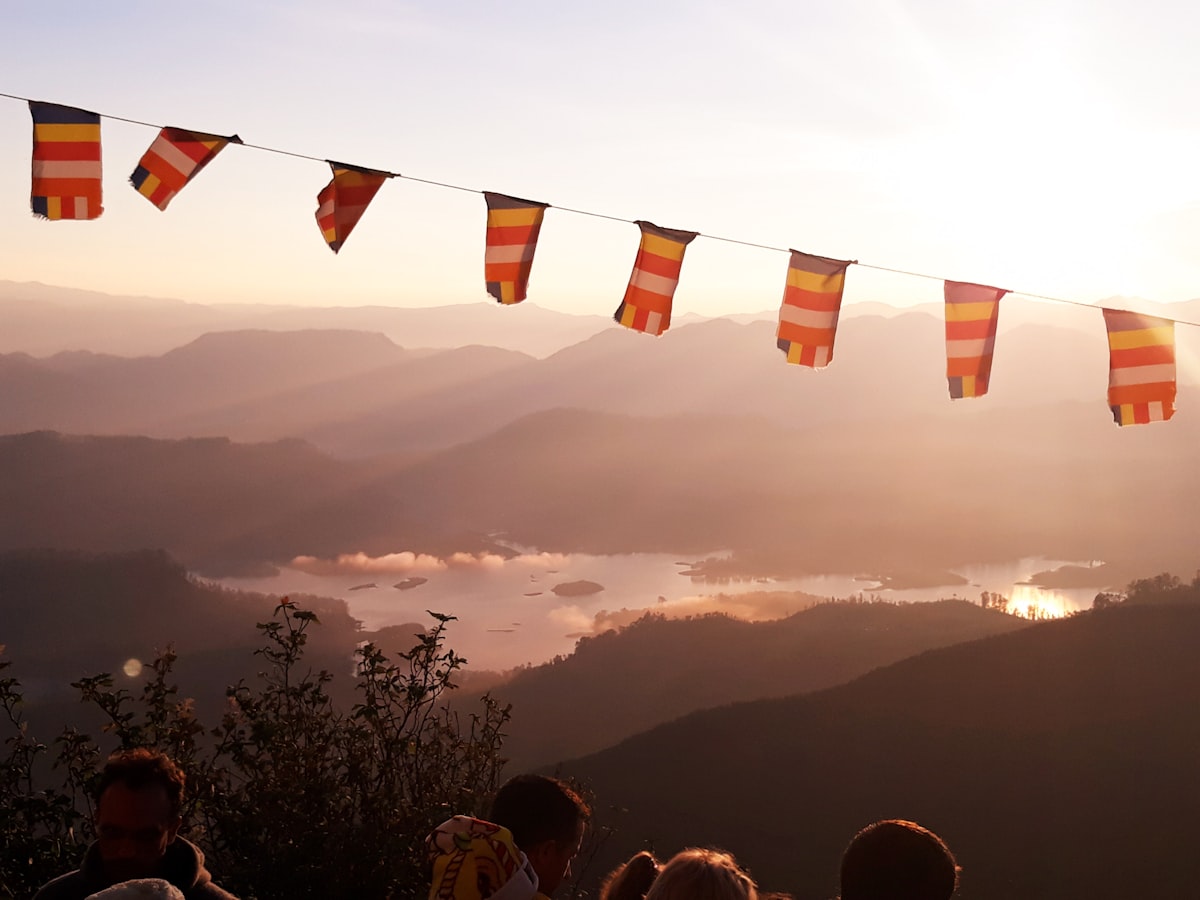
At the top, a small temple surrounds the sacred footprint. The sunrise from the summit is legendary — as the sun rises, the perfectly conical shadow of the peak stretches across the landscape, a phenomenon known as the “Shadow of the Peak.”
History and Significance
The mountain has been a pilgrimage site for over 1,000 years. King Valagamba of Anuradhapura is said to have taken refuge here in the 1st century BCE. Arab traders knew the mountain as far back as the 8th century.
Marco Polo described the pilgrimage in the 13th century, and Ibn Battuta, the great Moroccan traveller, climbed it in 1340.
Tips for Visitors
- Start early: Leave Dalhousie at 2:00-3:00 AM to summit before sunrise (around 6:15 AM).
- Dress warmly: The summit temperature can drop to 5°C. Bring warm layers and a jacket.
- Wear good shoes: The steps can be steep and slippery. Proper hiking shoes or trainers are essential.
- Bring a torch: Essential for the pre-dawn climb (a head torch leaves your hands free).
- Pace yourself: The climb is a marathon, not a sprint. Take breaks at the tea shops.
- Full moon Poya days: The most auspicious times to climb, but also the most crowded.
- Off-season climbers: Outside December-May, the trail is dark and shops are closed. Not recommended for inexperienced hikers.
Photo Gallery
How to Get There
By Bus
LKR 400 - LKR 1,000Most pilgrims start the climb from Dalhousie at 2:00-3:00 AM to reach the summit for sunrise.
By Train
LKR 250 - LKR 1,500The train to Hatton passes through stunning hill country scenery.
Private Vehicle
LKR 12,000 - LKR 18,000Current Weather
Loading weather data...